


When Sherri McMullen opened her first boutique in Oakland, a bank told her retail had a shelf life of two to three years and to come back once she’d survived that long. Nineteen years later, the founder and CEO of McMullen has built one of the most respected independent luxury retailers in fashion, and recently opened a store on San Francisco’s famed Maiden Lane.
Rather than chase fast growth, McMullen invested in time: knowing her clients, championing designers before anyone else knew their names, and building a team and community that trust her.
Named a Vogue Business 100 Champion and one of the Most Influential Women in San Francisco, she is known for spotting the next generation of designers, from backing Christopher John Rogers early in his career to continuing to mentor young talent today. Her work and perspective have been featured in leading publications including Vogue, Harper’s Bazaar, W Magazine, and The Business of Fashion.
In this conversation, McMullen reflects on what nearly 20 years of intentional growth has given her, why she believes in the power of brick-and-mortar, and what it means to champion underrepresented designers.
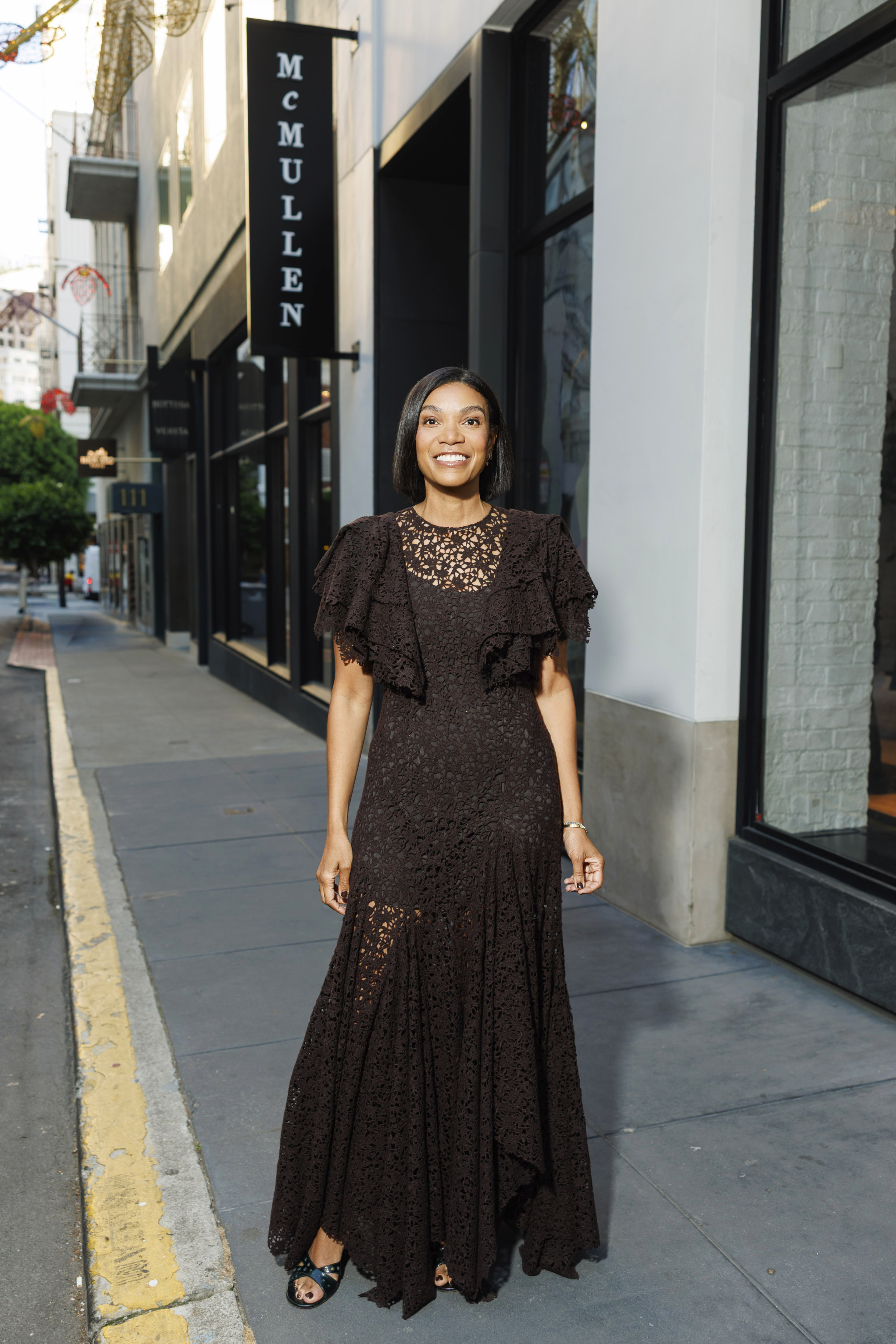
You’ve been building your brand, McMullen, for nearly two decades. You recently opened a store on Maiden Lane, a block that includes notable brands like Chanel and Hermès. What does it mean to you to claim a spot on the iconic street as a Black-owned boutique, and what did 19 years of intentional growth give you that faster growth wouldn’t have?
Claiming a spot on Maiden Lane is a statement. To have a Black woman-owned, independently built luxury boutique alongside some of the most iconic fashion houses in the world says something about representation, ownership, and what is possible. We belong in these spaces, and it matters to me that the next generation of entrepreneurs and creatives can see that.
When I started McMullen in Oakland 19 years ago, the goal was never just to open stores. It was to build something lasting, rooted in community, discovery, and a distinct point of view. Luxury has always been about more than the labels we carry. It’s about how we make people feel, the relationships we build, and the experience we create.
Growing intentionally gave me what speed never could: time. Time to truly know our clients, to champion designers from the very beginning, to build an incredible team, and to earn the trust of our community. Some of our clients have been with us since our very first store, and now we’re dressing two generations of the same family. They walk into Maiden Lane and proudly tell us that. We talk about their first purchase, or the designer they discovered at McMullen long before anyone else knew the name. That means everything to me. You can’t rush that kind of relationship.
Maiden Lane is the next chapter of that story. We bring our own perspective to an iconic luxury street, and I’m proud that we built a business with the foundation, confidence, and authenticity to do it on our own terms.
So many of us shop online now, yet you’re opening stores. What can a brick-and-mortar store do for a customer and a brand that a website can’t?
People are craving connection, and that's exactly why I believe in physical retail. Online shopping offers convenience, but nothing replaces walking into a space where you feel welcomed, understood, and inspired.
Our clients have full lives, and they often come to us at the moments that matter most. A new job. A keynote at a conference. An award. A wedding, a growing family, a trip, a dinner they're hosting. They want help finding the right pieces for that moment, but we think beyond it. We want them to buy only what they love, wear it again and again, and come back to discover more. There's nothing like the dressing room experience for that. You're talking with a stylist who knows you, or who is getting to know you, and something real starts to form. If we do our job well, it becomes a lasting relationship.
Our stores are also places of discovery. You can touch the fabrics, see the craftsmanship up close, and try something you never would have considered. A client might come in for one thing and leave having found a new designer or a completely different way of dressing.
For a brand, a store is your point of view brought to life. Every detail tells a story about who we are: the designers we champion, the art on the walls, the music, and most of all, the people who greet you at the door.
I don't see stores and e-commerce as competitors. They do different jobs and make each other stronger. A website makes fashion accessible wherever you are. A store gives you something to remember. That's what keeps people coming back.
You’ve always favored classic pieces over fast fashion. How does sustainability influence the way you buy and how does that connect to the circular movement?
I’ve never been interested in fashion that’s disposable. For me, sustainability starts with choosing pieces you genuinely love, that are beautifully made, and that you’ll want to wear for years. I look for things that feel relevant today and will still have a place in your wardrobe ten years from now.
That philosophy shapes how we buy at McMullen. When I’m at market, the first question I ask is: where is she wearing that? Can I see our clients moving through their everyday lives in it? From there, I’m looking at the designer’s point of view, the quality of the materials, and the craftsmanship. I want our clients to build wardrobes thoughtfully, adding pieces that work with what they already own rather than feeling they need to start over every season.
I wear my own pieces over and over. I love them, I organize my closet so I can see everything I own, and I never save things for the “right occasion.” Our clients are the same way. They love wearing what they’ve bought from us, year after year. And to me, that’s the foundation of circular fashion, valuing what we already own and extending its life. When you invest in something well made, it can have a life beyond one person or one moment. You can wear it for years, have it tailored or repaired, pass it down, or give it a second life in someone else’s wardrobe. Some of the most interesting personal style comes from mixing pieces you’ve owned forever with something new.
Sustainability doesn’t have to feel overwhelming. It starts with being intentional about what we bring into our closets, caring for what we own, and recognizing the value in keeping beautiful things in circulation. The most sustainable piece is the one you’ll never want to give up.
You were one of the first to champion Christopher John Rogers. What does it mean for you to be able to champion underrepresented designers?
Honestly, I get a little choked up when I think about it. Championing underrepresented designers has always been central to what we do at McMullen. I've never believed great talent should be defined by who has access, who they know, or whether the industry has already recognized them. Some of the most exciting voices in fashion bring a perspective we haven't seen before, and I've always felt a responsibility to make space for them.
Christopher reached out to me in 2019, and I saw his collection that February during market. When I returned home, I couldn't stop thinking about it, his extraordinary use of color, his sense of proportion, the confidence of every piece. I knew I wanted to bring him in that fall. We launched the collection at our Oakland flagship with a celebratory dinner and event in the store. Christopher made one-of-a-kind pieces for our clients, and every one of them still has theirs. He also made a very special piece for me that was never produced for stores in the original pink and coral colorway, called the Strawberry Dress. I later lent it to the de Young Museum for Fashioning San Francisco: A Century of Style, where it was shown alongside a second CJR piece from my personal collection.
That's what championing a designer means to me. It's investing in their vision, telling their story to our clients, and building a relationship that grows over time. Emerging designers need retailers who believe in them, place real orders, and give their collections the chance to find an audience. That commitment extends beyond the sales floor. I continue to mentor young designers, sharing what I've learned about building a business and navigating the industry, because having someone willing to offer guidance and open doors can change everything.
As a Black woman who built an independent business in an industry where access hasn't always been equal, I know how much those opportunities matter. There's nothing more rewarding than watching a designer you believed in from the beginning grow into their success, and knowing you played a small part in that journey.
Growing a business takes capital. How easy or difficult has it been to raise capital as a Black woman founder? Can you tell us a story of when funding felt the hardest, and how you got through it?
Access to capital has been, without question, the most challenging part of building McMullen. When I first started, I went to a bank for financing and was turned down. I was told that retail businesses typically have a shelf life of two to three years and that I should come back once I’d proven I could survive that long. I was determined to prove them wrong.
As a Black woman founder, I’ve often felt held to a different standard. When I eventually raised capital from investors, I felt an enormous responsibility to make the most of that opportunity. Black women receive less than 1% of venture capital funding, and I was acutely aware of how rare it was to be in that position. I felt like I had to move mountains, not just for my business, but because I knew how many other women were still waiting for that same opportunity. That responsibility still shapes how I treat every dollar entrusted to us.
What people don’t always understand about retail is how much capital it takes just to operate. We often pay deposits to emerging designers six to eight months before we receive the inventory. Those designers need that money to produce their collections, and we want to support them. I call our vendors partners because we’re all investing in one another’s success. But it means cash goes out long before it comes back in. For years, we managed that cycle without a line of credit, and it taught me to run this business with real discipline.
When the Maiden Lane opportunity came along, I had begun conversations with angel investors, but I realized the best use of my energy was making the store happen. So we did it ourselves. We opened our flagship primarily through the profits of our business, with some support from small grants, and without raising additional outside capital.
I think about that bank telling me to come back in two or three years. Here we are, nearly two decades later, with a profitable business that largely funded its own flagship. Now we’re ready for the right partners to help us build what comes next.
Who is a woman you admire?
My mother, without question. She was the strongest, most grounded and loving woman I've ever known. She raised six children, built a real estate business, and gave generously to her community. Somehow, she never missed a single activity when we were growing up. She made each of us feel like we were the most important person in the world.
What I admire most is that she gave so much of herself to others but never lost herself in the process. She carved out space for herself unapologetically. She meditated every single day, and we all knew to give her that time. She lived with breast cancer for more than a decade, yet remained deeply rooted in her faith and intentional about how she lived her life.
She was also incredibly chic. She loved fashion, carried herself with such confidence, and had an effortless sense of style. She loved her family fiercely.
I lost my mother when I was 13. Even in the short time I had with her, she taught me that strength and softness can coexist, that success means very little without the people you love, and that making space for yourself is just as important as making space for others. So much of the woman I am today comes from understanding, as an adult, the woman she was.
What is your productivity secret?
I'm a planner. Everything lives on my calendar, and I'm still someone who loves a notebook and physically writing down what needs to get done. I use whiteboards for the bigger picture, whether it's work, family, or personal goals. At the start of each year, I set goals for myself, and there's nothing more satisfying than checking them off. But not everything gets done, and I've learned to be okay with that. I revisit what didn't happen and decide whether it still matters. Sometimes it moves to the next year, and sometimes it falls off the list completely.
I'm very protective of my time, especially in the mornings. I carve out space for meditation or quiet time, coffee and emails, school drop-off, and exercise. It's all on my calendar, and I don't schedule over it. Running a business with international partners means some mornings start with very early calls, but I protect that routine as much as I can.
I leave the office by 4:30 to pick up my son from school, so I'm focused during the hours I'm there. I've learned to make decisions efficiently, prioritize what needs my attention and trust my team.
For me, productivity isn't about fitting more into every day. It's about being intentional with my time so I can be fully present for the things that matter most, both at work and at home.
What’s one thing you can’t live without?
My morning coffee. It’s a ritual I look forward to every day: the grinding of the beans, the steaming of the milk, the pour, and sitting with it in my favorite chair in the living room. But if I’m being honest, the one thing I truly can’t live without is a hug from my son.
What is one big trend you’re excited about in 2027?
I’m excited about the return of expressive dressing: bold color, interesting proportions, beautiful embellishment. I saw so much of it at market for 2027, and I love when fashion feels creative, playful, and full of personality.
I’ve always been drawn to designers with a strong point of view, and I loved Julian Klausner’s latest collection for Dries Van Noten. I’m excited to see women embracing pieces that feel special and unexpected. These are often the pieces our clients treasure most. At McMullen, we encourage clients to experiment, take chances, and find their own way of wearing things. Fashion should be fun, and I’m looking forward to seeing more of it in 2027.
What book or film/show has been the most impactful in your career or life?
Love Jones is a film that has stayed with me. I love the visual storytelling, the richness of the characters, and the soundtrack, which is such an important part of how the story makes you feel.
What I appreciate most is that the characters are passionate about their own lives and creative pursuits, but they’re also trying to figure out how to make space for love without losing themselves in the process. That tension feels very real to me, especially as someone who has spent nearly two decades building a business. I think the best relationships allow you to be fully yourself, and I love that the film explores how complicated that can be.
