


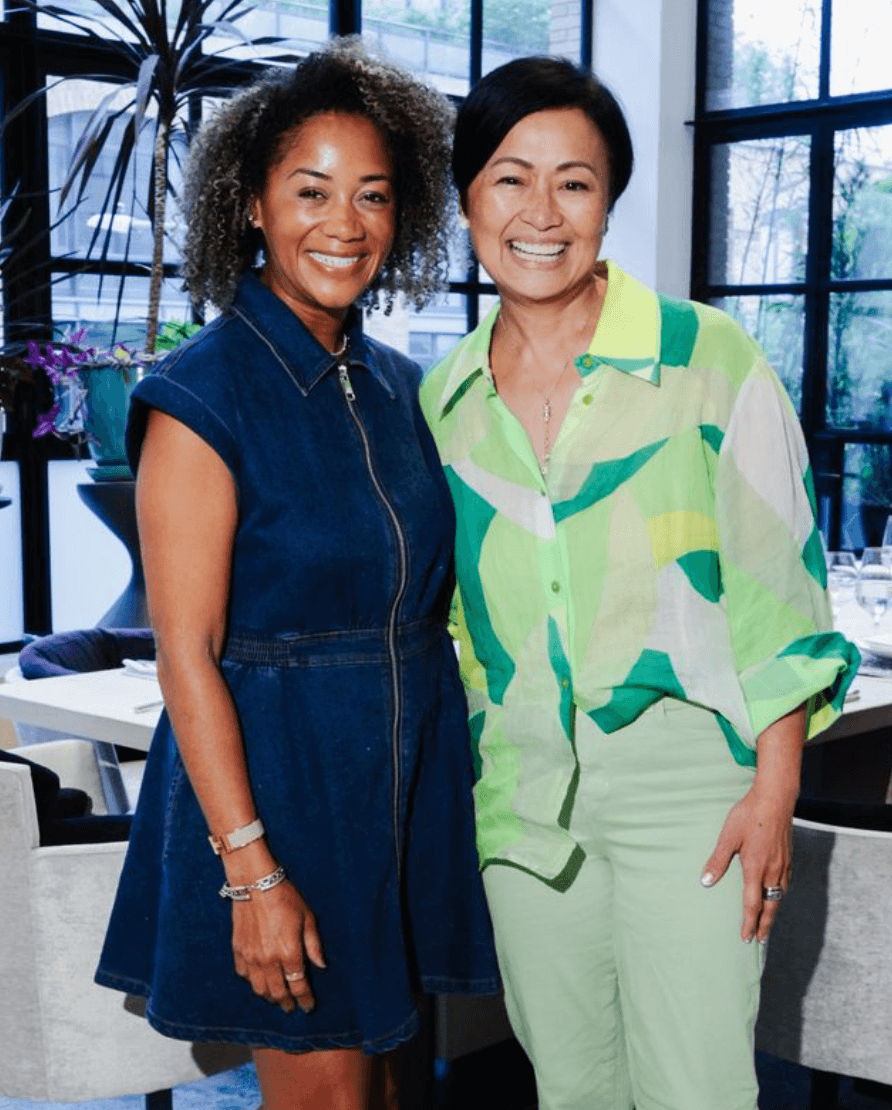
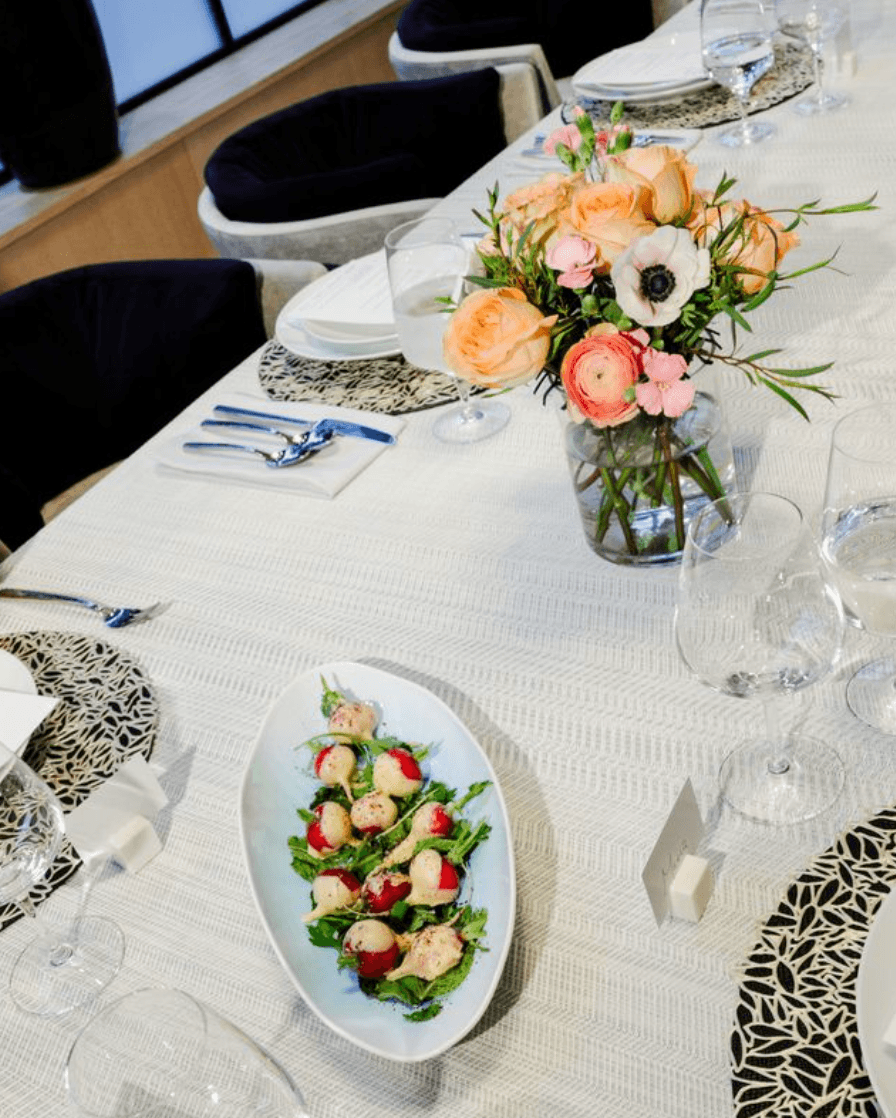
Last week, WIE Suite members gathered around dinner tables in New York City and Connecticut for our latest Table for Eight, hosted by Rochelle Stewart and Sheila Lirio Marcelo, Billie Whitehouse, Carol Schuster, and Amanda Goldslager.
And a special thank you to our hosts for creating space for these conversations, and to our partners at The Culinistas, UrbanStems, and Avaline for helping make the evening possible.
This season's conversation centered on a question many women find themselves confronting after years of achievement and momentum: As you think about the next phase of your life and career, what are you ready to leave behind, and what decision will define your next chapter?
The answers revealed a common shift taking place across industries, generations, and career stages. The conversation wasn't about ambition fading. It was about ambition evolving.
Again and again, women spoke about moving from execution to direction.
For founders, that meant letting go of the belief that they needed to be involved in every detail. For executives, it meant recognizing when expertise had become a constraint rather than an advantage. For many, it meant confronting the reality that the skills that built the first chapter of their careers may not be the skills required for the next.
One founder reflected on the challenge of releasing control after years of building a business from the ground up. Another shared that hiring a fractional CFO transformed her company and left her wondering why she had waited so long. The lesson resonated across the table: the cost of holding on is often greater than the cost of letting go.
Delegation, however, was only part of the conversation.
Many women spoke about the ways success itself changes over time. What once felt urgent no longer feels meaningful. The definition of achievement that drove earlier chapters often requires reexamination as priorities shift and perspective deepens.
Several members reflected on how aging forces a reframing of success, particularly for women. While experience brings confidence, wisdom, and clarity, it can also bring new societal expectations and assumptions. The question becomes less about proving capability and more about determining what truly matters.
The conversation repeatedly returned to a deceptively simple question: What do I actually want?
Not what others expect. Not what once seemed impressive. Not what comes next on paper. What do I want now?
That shift felt especially relevant in a moment when the future of work itself is changing. Members discussed the lasting impact of the pandemic on leadership, workplace culture, and flexibility. They also explored the growing influence of AI, both as a source of leverage and a challenge for developing future talent.
While many saw opportunity in using AI to eliminate repetitive work and create capacity for higher-value thinking, others cautioned against outsourcing judgment itself. Technology may accelerate execution, but taste, discernment, creativity, and leadership remain distinctly human skills.
Perhaps the strongest thread throughout the evening was the idea that the next chapter is not necessarily about doing less. It's about choosing more intentionally.
Working differently instead of simply working harder.
Creating space instead of filling every moment.
Trusting others to carry what no longer requires your attention.
And giving yourself permission to leave behind goals, definitions, and expectations that no longer fit.
The collective wisdom from the evening was clear: growth often requires subtraction before it requires addition. The next chapter begins when we stop carrying everything forward.
