


On March 18, Diane von Furstenberg and The WIE Suite welcomed more than 150 women leaders, founders, and cultural changemakers to DVF’s headquarters in New York for a convening held during Women’s History Month that explored what it truly takes to build influence, legacy, and enduring companies.
The afternoon opened with a powerful poem by Rupi Kaur, followed by welcoming remarks from Diane von Furstenberg and The WIE Suite founder Dee Poku, who framed the day around a central question: What kind of legacy are we building — and who are we bringing with us?
Diane set the tone early with a reflection drawn from her own decades as a founder. “At a later part of my life, I discovered the power of kindness,” she shared. “Kindness is a currency — and just like money, it compounds.”
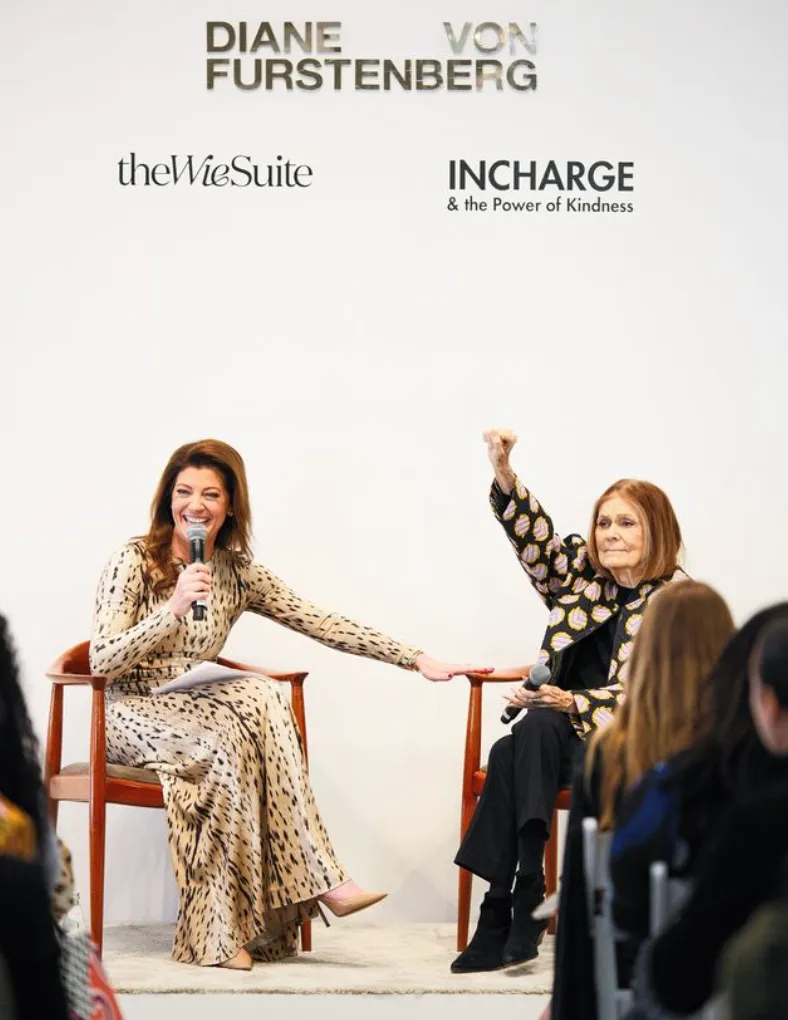
The first conversation, Using Your Voice: Impact & Advocacy, brought together activist Gloria Steinem and journalist Norah O’Donnell. Their dialogue explored the importance of storytelling, visibility, and connection in shaping social and institutional change. Steinem reflected on the structural realities women still navigate: “We are still in a patriarchal, hierarchical system — and the higher you go, the more patriarchal and hierarchical it becomes.” Yet she also emphasized the collective path forward: collaboration, connection, and being in charge.
Themes of power and purpose continued in The Great Wealth Transfer, where Ida Liu, CEO of HSBC, and investor Ita Ekpoudom discussed the unprecedented economic influence women are poised to hold. “Women are going to control almost 50% of global wealth in the next five years,” Liu said. “I’m optimistic because women — and the next generation — invest with purpose.” She also introduced the idea of a Decency Quotient, or “DQ,” as a leadership metric: how we show up, support one another, and work collaboratively toward shared goals. Ekpoudom echoed the importance of collective advancement, noting, “We have two hands — one to push ourselves forward and one to bring another woman along.”
In Built to Last: Brands That Define Culture, Jane Hertzmark Hudis of The Estée Lauder Companies and Samira Nasr, Editor-in-Chief of Harper’s Bazaar, examined what it takes to steward institutions across generations. Hudis reflected on a defining shift in her own leadership philosophy: “There was a moment when I decided being a great leader was just as important as delivering the numbers.” She also offered a founder’s reminder that resonated across the room: “Love the consumers you have before you get the consumers you want.”
The business opportunity and urgency surrounding women’s health took center stage in a conversation between Kate Ryder of Maven Clinic and Toyin Ajayi of Cityblock Health, moderated by investor Hannah Bronfman. Their discussion highlighted both the systemic gaps in research and funding — and the transformative potential of founder-led innovation in this sector.
The afternoon then turned to the evolving nature of influence in Owning Your Story: The New Influencer, where Tiffany Lopinsky, co-founder of ShopMy, and beauty entrepreneur Danessa Myricks explored how credibility and community now drive brand discovery. “People are most influenced by word of mouth,” Lopinsky noted — by trusted friends, experts, and authentic advocates. Myricks reflected on the unexpected role storytelling played in her own rise: “I didn’t consider myself an influencer. But I had no choice except to stand up and tell my story. And the more I did, the more people rallied around what I was building.”
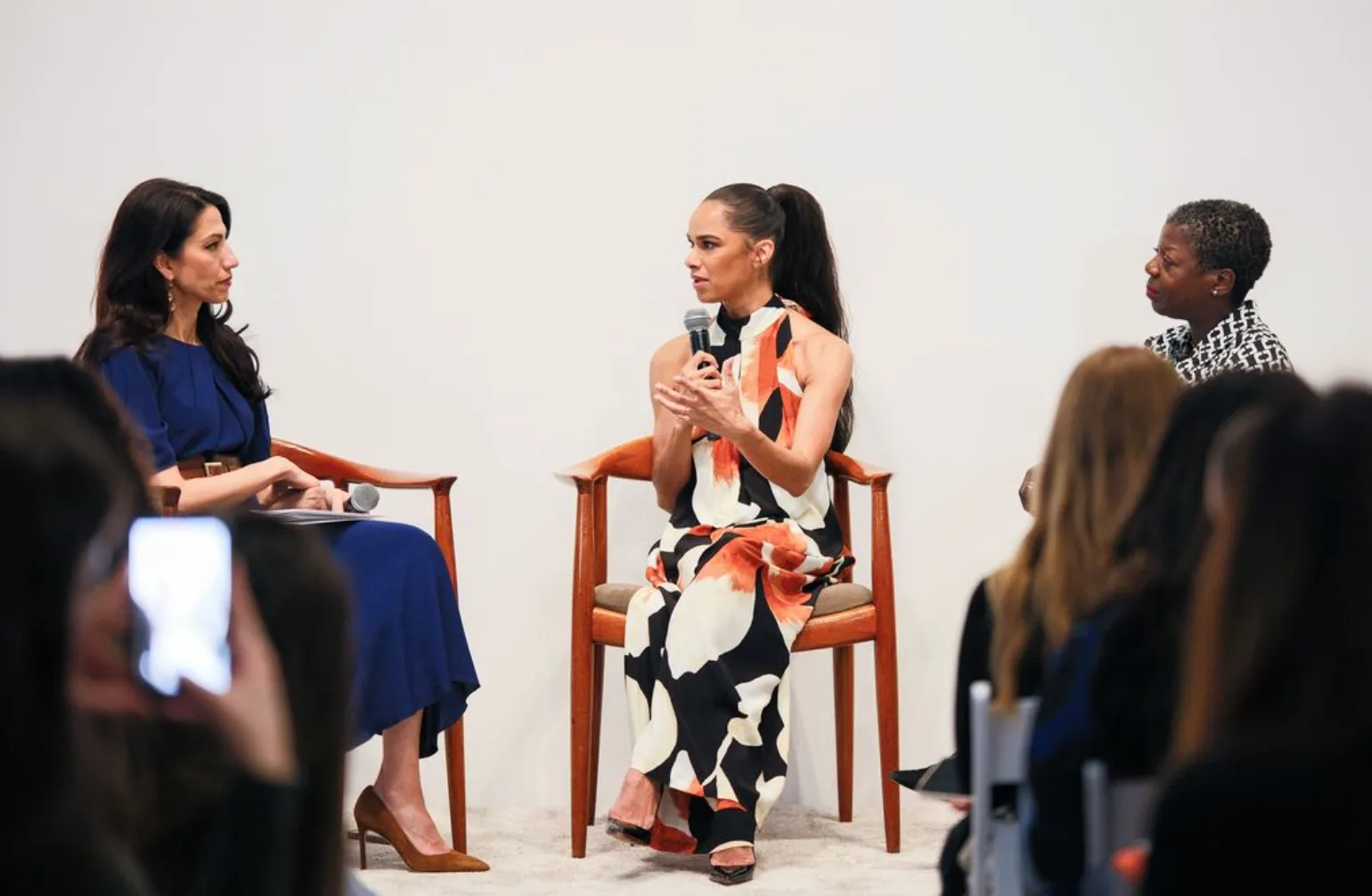
The program concluded with activist and ballerina, Misty Copeland, Thelma Golden, Director of The Studio Museum of Harlem, and Huma Abedin moderating a conversation on translating personal visibility into lasting cultural impact, followed by a live performance from singer-songwriter Rozzi.
Across each dialogue, a shared thesis emerged: influence today is not simply about platform or scale. It is about stewardship of capital, culture, community, and opportunity. The women gathered in the room were not only shaping what comes next; they were actively building the structures that will allow others to rise alongside them.
